Preparing Your Vermont Home for Winter
Andrew December 30, 2025
Andrew December 30, 2025
Prepare your Woodstock, Vermont home for winter 2026 with this practical checklist, including insulation checks, heating tune-ups, roof and gutter prep, energy tips, and local seasonal insights for homeowners in the Green Mountains.
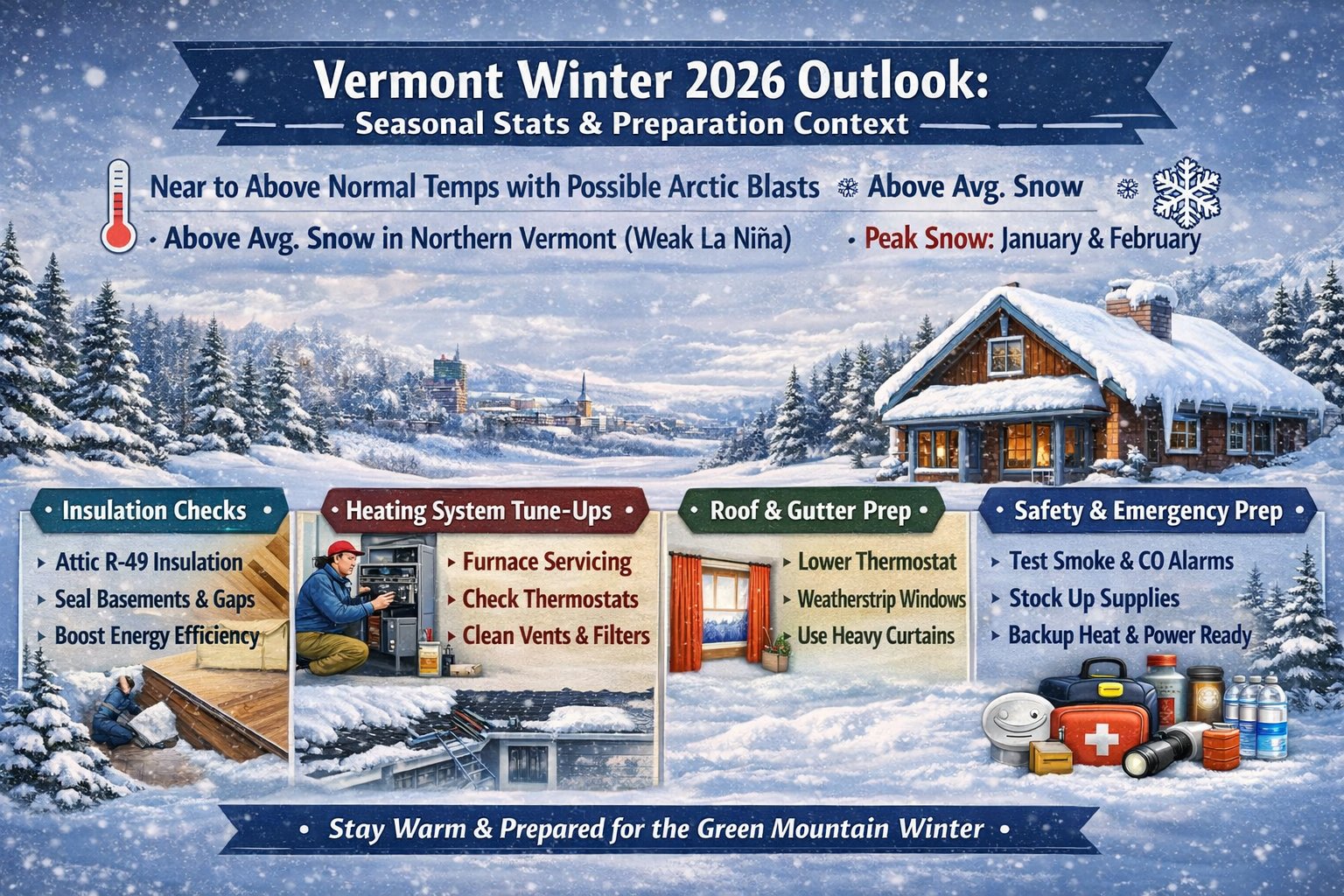
Woodstock winters feature classic New England variability, with 2025-2026 forecasts suggesting near or slightly above-normal temperatures overall, though cold snaps and Arctic influences could appear, especially later in the season. Snowfall projections range from average to potentially higher in elevated areas, shaped by a weak La Niña pattern. Local patterns often include freeze-thaw cycles and accumulation that test roofs and drainage systems. Energy needs tend to rise during colder periods, highlighting the role of timely maintenance in supporting home comfort and efficiency, like ensuring everything is buttoned up before the first real snowfall blankets the village green.
Many Woodstock properties blend historic charm with modern updates, where insulation directly impacts heat retention through long cold stretches. Attic areas commonly target R-49 levels for optimal performance, with attention to uniform coverage, moisture barriers, and no gaps. Basement rim joists and foundation zones benefit from similar reviews to limit heat escape, while sealing around windows, doors, pipes, and outlets reduces unwanted drafts. These combined efforts frequently result in lower heating demands across the winter months.
Heating systems in Woodstock homes, whether furnaces, boilers, or supplemental wood units, handle peak loads during extended cold weather. Scheduling professional servicing ahead of heavy use covers cleaning, filter updates, and safety inspections. Homeowners often test thermostats (including programmable options for temperature setbacks), clear vents of obstructions, and address radiator air pockets where applicable. Consistent upkeep promotes reliable operation and better indoor air quality throughout the season.
Woodstock's sloped roofs and scenic elevations manage snow well when prepared, yet heavy loads and melt-refreeze events can create challenges like ice dams. Fall clearing of gutters, downspouts, and valleys supports smooth drainage, paired with checks for secure shingles and flashing. Improved attic ventilation limits upward heat loss, while roof rakes enable safe removal after storms. In spots with recurring buildup, heat cables along eaves offer targeted prevention. Strong airflow and drainage together help mitigate stress from weight or water backup common in the area.
Daily habits complement structural prep in managing Woodstock's heating-focused energy profile. Adjusting thermostats lower during absences or overnight, using insulated curtains to harness daytime warmth and block evening loss, and refreshing weatherstripping or caulk around entry points all add up over time. Keeping heating components accessible and reviewing local efficiency resources provide additional straightforward ways to moderate winter usage without extensive changes.
Rural and village settings in Woodstock can experience storm-related outages or heightened heating risks. Regular testing of smoke and carbon monoxide detectors, along with basic supply stockpiles (water, food, lighting, batteries), forms a solid foundation. Ensuring exterior vents stay clear, maintaining fuel reserves for alternatives, and planning safe outdoor generator placement further enhance preparedness. These steps offer practical support when weather shifts quickly in the Green Mountains.
Stay up to date on the latest real estate trends.