What Actually Holds Up a Lake Sunapee Waterfront Closing
August 6, 2026
August 6, 2026
Buyers arriving at Sunapee from Boston or New York usually expect the friction to come from the loan, the appraisal, or a picky inspector. On this lake it rarely does. The two documents that decide whether you close on time are a state-mandated septic study and a defensible paper trail on the dock, and the same rulebook that produces those documents is what will govern every renovation, tree removal, and boat slip decision the new owner makes for the next thirty years.
That is the trade Sunapee asks of its owners. Lake Sunapee's water is Class A, high-quality surface water suitable for recreation and, when adequately treated, for drinking water sources, and it stays that way because the state and the Lake Sunapee Protective Association keep a tight grip on what happens inside 250 feet of the shoreline. Understanding that grip before you sign a purchase and sale is the difference between a smooth June closing and a July one.
New Hampshire is one of a small number of states that requires a septic inspection tied to the transaction itself, not to the buyer's discretion. Under RSA 485-A, when selling developed waterfront property, a Site Assessment Study is required for all properties with on-site septic that are contiguous to or within 200 feet of waterbodies under the SWQPA. The study has to be performed by a New Hampshire licensed septic evaluator, and it must be in hand before the deed transfers.
A few things follow from that rule that matter to both sides of the table:
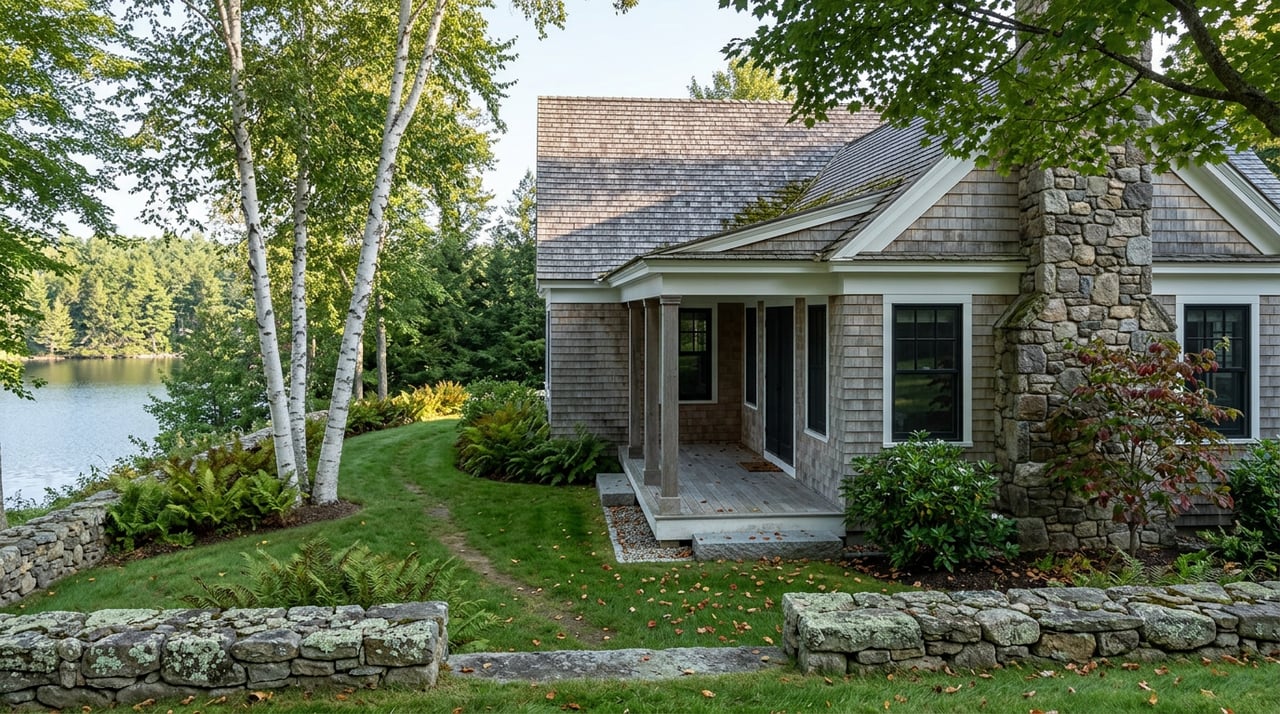
Every buyer who tours Sunapee walks the shoreline and starts imagining the changes. Take down that scrappy hemlock for a lake view. Widen the patio. Add a bunkhouse. The Shoreland Water Quality Protection Act sets the ceiling on all of it, and the ceiling is lower than most out-of-state buyers assume.
The core numbers, in one place:
| What | Rule | Source |
|---|---|---|
| Protected shoreland zone | Extends 250 feet landward from the reference line | RSA 483-B |
| Primary structure setback | 50 feet minimum from reference line | Env-Wq 1400 |
| Septic setback | 75 feet minimum from reference line | Env-Wq 1400 |
| Waterfront buffer | 50 feet, managed on a 25x50-foot grid with a point system | Env-Wq 1400 |
| Impervious surface trigger | Stormwater plan required over 20% coverage; engineered system over 30% | Env-Wq 1400 |
| Footpath to water | 6 feet wide maximum, no concentrated runoff | Env-Wq 1400 |
The buffer point system is the piece that surprises people. Within the waterfront buffer, tree coverage is managed with a 25 by 50 foot grid and point system, and trees and saplings may be removed provided the sum score of the remaining trees, saplings, shrubs and groundcover within the affected grid segment is at least 25 points. Translated: you do not clear a view corridor by picking your favorite trees. You count points on a grid, and if you fall below the threshold you replant until you are back over.
No natural ground cover shall be removed except for a footpath to the water that does not exceed 6 feet in width and does not concentrate stormwater or contribute to erosion, and natural ground cover must remain intact. The rocks and stumps stay too. Buyers who plan a lawn-to-the-water look will need a different lake.
For projects that touch the 250-foot zone, the permit path is real work but not always slow. The fee to apply for a PBN, EXP or Standard permit is $400, and the voluntary dock registration is $200; the primary benefit of registration is that existing non-tidal legal structures are exempted from the requirement to obtain future repair or replacement permits from NHDES for the duration of the accepted registration, typically five years. Budget the fees, and more importantly budget the calendar.
Sunapee is a 4,000-acre-class lake with restrictive dock rules, and the specifics matter because the state distinguishes between water bodies over and under 1,000 acres. A seasonal dock qualifies for streamlined permitting only if it is no more than 6 feet wide by 30 feet long for water bodies under 1,000 acres, or 6 by 40 feet on lakes 1,000 acres or larger, sits on a parcel with at least 75 feet of shoreline frontage, and is at least 20 feet from an abutting property line. Sunapee lands in the 6x40 tier, but a lot of grandfathered docks on the lake predate current rules.
That grandfathered status is where transactions go sideways. In 2021 the state created a voluntary registration program that was designed, in part, to solve a real estate problem: owners of seasonal docking structures have often simply maintained the structures that were on the property when they purchased the lot but cannot provide documentation that the structures were legally constructed, which can create complications during the sale of the property or if a complaint is filed against the structure; the new dock registration process only requires information demonstrating the docking structure and configuration existed prior to January 1, 2000.
Then the punchline for anyone selling: registrations are valid for five years, or until ownership of the property changes, whichever occurs first.
Practically, this means:
The right time to sort this out is when the listing goes live, not the week the appraiser visits.
Sunapee is unusual among New Hampshire lakes because it has beaten back invasives twice. A similar success story occurred when milfoil was discovered in its waters in 2001, when a massive mobilization of volunteers and lake advocates saw that plant eradicated and gave rise to what is now the Lake Host program. The second win is more recent. After a Lake Host stationed at a public launch noticed a stem of curly-leaved pondweed clinging to a boat in 2024, the lake association and its network of volunteers mobilized, divers pulled as many of the plants as they could find, a survey one year later found more that were removed, and this season, surveys by divers and dozens of volunteer kayak weed watchers have turned up no evidence of the plant in Lake Sunapee.
That result is not evenly distributed across New Hampshire. Suncook is one of about 100 water bodies in the state with a known infestation of an aquatic invasive plant, according to the New Hampshire Department of Environmental Services. On Sunapee itself, the nearby comparison is instructive: Baptist Pond, located upstream of Sunapee, saw curly-leaved pondweed detected at a later stage, only a year or two late, but that was long enough that eradication there is no longer feasible.
For a buyer, this changes two things. First, the LSPA membership and Lake Host program you will be asked to support are the same infrastructure that just protected the value of your asset. Second, the disclosure conversation with your seller should include what is not on the lake, because a Class A oligotrophic lake with no established invasive is a materially different product from the alternative.
The lake itself is over 8 miles long with 70 miles of pristine shoreline and 8 islands, and five towns border the shoreline: Georges Mills, Newbury, Sutton, Springfield, and Sunapee. Each has its own zoning, its own conservation commission, and its own view of what happens inside the shoreland overlay. The state floor is the same everywhere. The municipal ceiling is not. When a buyer asks whether a bunkhouse, a boathouse repair, or a driveway extension is realistic, the honest answer is that it depends on which side of a town line the parcel sits on, and it depends before you write the offer.
Do I really need the Site Assessment Study if the septic was pumped last month? A pump is not a study. Before transferring any developed waterfront property with a septic system within 250 feet of the reference line, the buyer must hire a New Hampshire licensed septic evaluator to assess the system. Different scope, different document, different signature.
Can I take the dock out and put in a bigger one? Only within the state's dimensional envelope, and only through the permitting process that fits your project. Unless you plan to continue using an existing, legally grandfathered dock without expanding it, you or your contractor will need to apply for and obtain a permit from NHDES, and under New Hampshire wetlands laws only grandfathered docks or repair/replacement of existing legal structures can avoid permitting requirements.
What counts as impervious surface on my lot? Impervious surfaces include roofs, decks, patios, paved or gravel driveways, parking areas, and walkways. Gravel drives count. A new patio counts. Plan accordingly if you are already near the 20% threshold.
How do I know if the dock is registered? Ask the seller for the NHDES registration number and confirm the file through DES OneStop before closing. If neither exists, price the effort of establishing pre-2000 status into the deal.
Waterfront transactions on Sunapee reward preparation and punish improvisation. If you are considering a listing on the lake or evaluating an offer on one, VTNH Realty has walked through these documents at the kitchen table with owners in Georges Mills, Newbury, and Sunapee Harbor. Request a free home valuation, and we will start the paperwork conversation before it becomes a closing conversation.
Stay up to date on the latest real estate trends.