Buying Land in Vermont: What Smart Buyers Need to Know
March 13, 2026
March 13, 2026
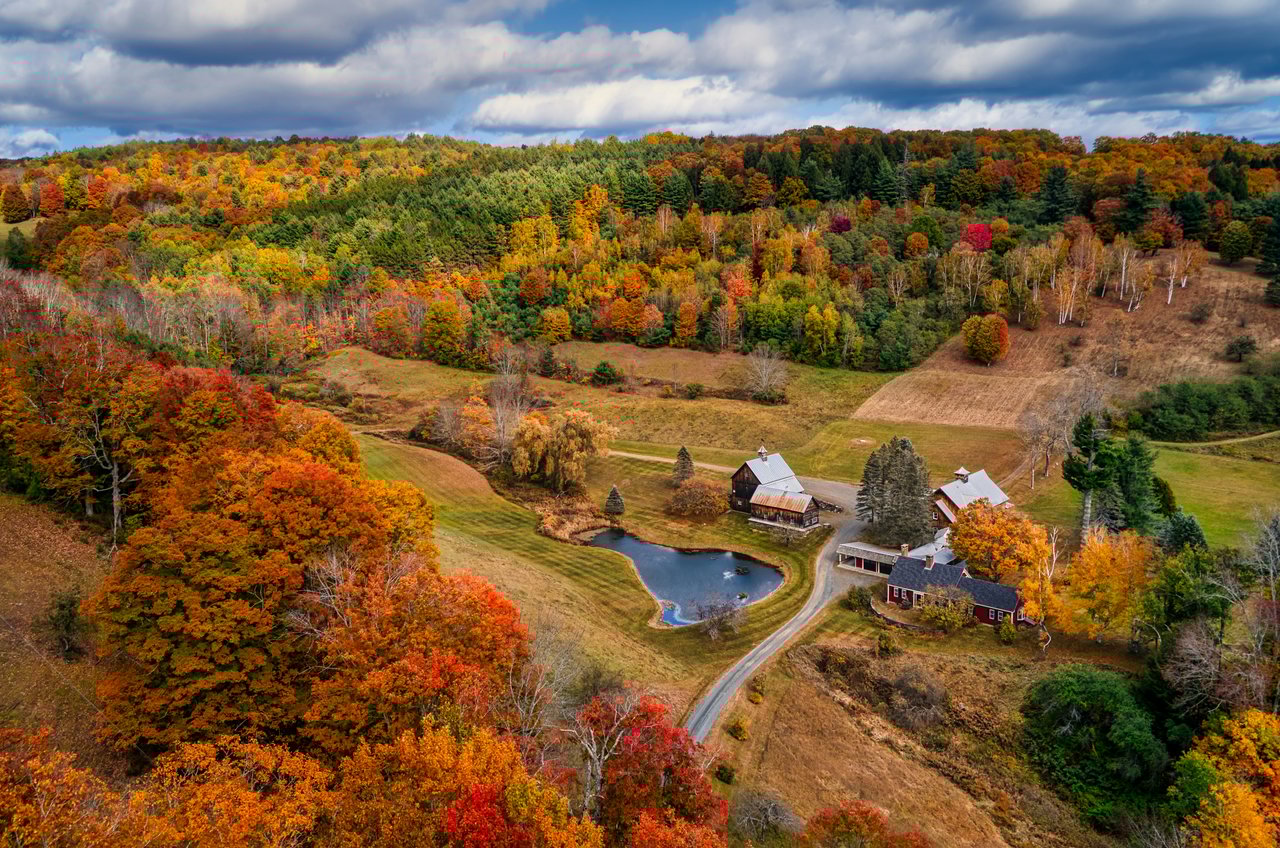
There is a distinct magic to the idea of buying land in Vermont. Rolling green hills, vibrant autumn foliage, and a quiet spot to build your dream home. It is a beautiful vision, and one that brings many people to the Green Mountain State every year.
But turning that dream into reality requires navigating strict environmental regulations, unique local laws, and practical challenges that catch even experienced buyers off guard. If you are relocating to Vermont or New Hampshire in 2026, you need to understand that buying raw land here is very different from buying a pre built home. This guide covers exactly what you need to know before you sign on the dotted line.
Vermont has some of the most rigorous land use and environmental protection laws in the country. A common misconception among out of state buyers is that any open field or wooded lot can be cleared and built upon.
The reality is different. Steep slopes, poor soil drainage, wetlands, and strict zoning laws mean that a parcel marketed as a "beautiful wooded lot" might not be a legal building site. Doing your homework before purchasing is absolutely essential.
Your first question when buying land should always be about what you are legally allowed to do with it. In Vermont, the answer can change dramatically just by crossing a town line.
Vermont gives significant control over zoning to local municipalities. Every town has its own regulations, and some very rural towns have no zoning laws at all.
But a lack of local zoning does not mean you have a free pass. State regulations still apply. You must check with the local town clerk or zoning administrator to verify the zoning district, minimum lot size, and setback rules. Never assume a lot is buildable just because it looks large enough.
If you spend any time looking at Vermont real estate, you will hear about Act 250. Passed in 1970, this landmark law was designed to protect the state's environment and community character from unchecked development.
Act 250 evaluates projects on criteria including water quality, wildlife habitat, and impact on local schools and traffic. While it typically applies to larger developments, it can affect individual residential lots, especially if the land was previously part of a subdivided parcel. Discovering an Act 250 requirement late can add substantial time and expense. Having a local attorney review the property's permit history is a crucial step.
The most critical factor in determining if Vermont land is buildable is how it handles water. Without a way to bring clean water in and safely process wastewater out, a lot is essentially unbuildable.
In Vermont, you cannot build a home without an approved wastewater and potable water supply permit from the Department of Environmental Conservation. This rule applies everywhere, even in towns that have zero local zoning laws.
To get this permit, the soil must be able to properly filter wastewater. This requires a percolation test (perc test) conducted by a licensed designer. They dig test pits to evaluate soil type and depth to the water table or bedrock.
If the soil drains well, you might qualify for a conventional septic system. If it is dense clay or very rocky, you may need a more expensive mound system. In some cases, the land may fail the perc test entirely, meaning it cannot support a septic system at all. Always make your purchase contingent on a satisfactory wastewater permit.
Unless your land has access to a municipal water system, which is rare in rural Vermont, you will need to drill a private well. Costs vary significantly based on how deep the drillers need to go to hit a reliable water source.
Vermont law requires all newly drilled wells be tested for water quality before use, checking for bacteria and contaminants like arsenic or uranium. Between well drilling, pump installation, and septic, buyers should budget tens of thousands of dollars for water and wastewater infrastructure alone.
Vermont has specific protections for its waterways and sensitive ecosystems that can severely limit where you place a home or clear trees.
Vermont classifies wetlands into three categories, with Class I and Class II receiving the most protection. If your property contains a Class II wetland, which is quite common, you are prohibited from building within a 50 foot buffer zone around it.
Before buying, consult the state's wetland inventory maps. If the land has areas of standing water, you may need a wetland consultant to delineate the boundaries, which could significantly shrink your usable building area.
If your dream is waterfront property, you must know the Vermont Shoreland Protection Act. This law regulates activities within 250 feet of the mean water level of lakes and ponds larger than 10 acres, limiting vegetation clearing and impervious surfaces near the water. Understanding these restrictions is vital before you buy.
There are practical, day to day realities of living in rural New England that must factor into your land buying decision.
Access to your property is not always as straightforward as turning off a paved highway. Many rural parcels are accessed via private dirt roads or shared rights of way. You need to verify who owns the road, who plows it in winter, and whether there is a formal, recorded road maintenance agreement.
You must also prepare for Vermont's infamous fifth season: mud season. During the spring thaw, unpaved roads can become deeply rutted and nearly impassable for weeks. Consider how the access road will hold up during April and whether emergency vehicles or construction trucks can reach your site.
A parcel might look like a great deal until you price out bringing electricity to the building site. If the nearest power pole is a half mile away, the utility company will charge you for every new pole. For remote parcels, the cost of running power lines can exceed the cost of the land itself.
Off grid solar is becoming more popular, but it requires significant upfront investment. Do not forget to investigate high speed internet options either, as reliable broadband is still lacking in some remote areas.
Financing raw land is different from getting a traditional mortgage.
Banks view raw land as a riskier investment than a house. Land loans typically require higher down payments, often twenty to thirty percent, with higher interest rates and shorter terms. Working with a local lender who understands the Vermont market is highly recommended. If you plan to build immediately, explore a construction to permanent loan, which rolls land and home costs into a single mortgage.
Property taxes in Vermont can be high, but the state offers a vital tax relief program. The Current Use Program allows eligible agricultural and forest land to be taxed based on its productive value rather than its fair market development value.
If you are buying a larger parcel, typically 25 acres or more, enrolling can save you thousands per year. It does require managing the land according to an approved forestry or agricultural plan. If you pull land out of the program to build, you will owe a Land Use Change Tax on that portion.
Buying land in Vermont is a complex process with very little room for error. National real estate portals will not give you the full picture. What Zillow won't tell you about buying rural in VT and NH is the reality of perc tests, Act 250 history, and local zoning quirks.
To navigate this successfully, you need a team of local experts: a knowledgeable real estate agent who specializes in land, a Vermont real estate attorney to review title and permit history, and likely a site engineer. They will help you identify the red flags before you buy, ensuring that the piece of Vermont you purchase is truly the foundation for your dream home.
If you are exploring different areas, our Vermont Upper Valley ZIP Code Areas Guide can help narrow down the right region. And when you are ready, reach out to our team for guidance from someone who knows this market inside and out.
Q. Do I need a permit to build a house on land in Vermont?
A. Yes. At a minimum, you need a state wastewater and potable water supply permit. Depending on the town, you will also need local zoning and building permits. Some properties may require an Act 250 permit or wetland approvals.
Q. How much does it cost to install a well and septic system in Vermont?
A. Budget between $30,000 and $50,000 for a basic well and conventional septic system. Engineered mound systems will push that cost higher.
Q. What is Act 250, and how does it affect buying land?
A. Act 250 is Vermont's statewide land use law. It regulates development based on environmental and community impacts. If a property is subject to Act 250, any development must be reviewed and approved by a regional commission.
Q. How do I know if land in Vermont is actually buildable?
A. Conduct thorough due diligence before closing. This includes a satisfactory perc test, verifying local zoning, checking for wetlands or flood zones, and confirming legal access.
Q. What should I look out for regarding road access and mud season?
A. Verify if the access road is town maintained or private. If private, ensure there is a deeded right of way and a recorded maintenance agreement. During spring "mud season," many dirt roads become nearly impassable, which can impact construction schedules and daily commuting.
Stay up to date on the latest real estate trends.